
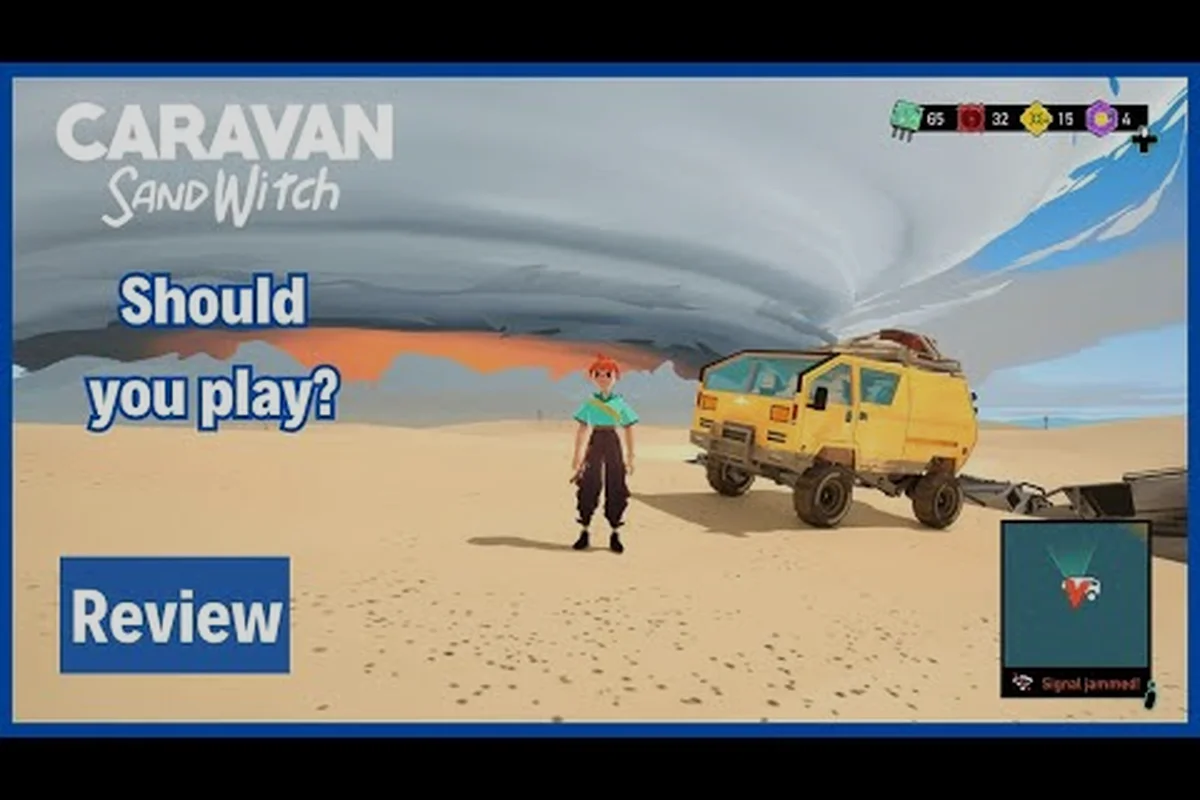
Starting a new adventure on the planet Cigalo can feel overwhelming, especially when the game drops you into a vast, sun-drenched landscape with only a rusty van and a vague lead about your missing sister. These Caravan SandWitch beginner tips focus on the prologue and the first few hours, helping you prioritize exploration, understand the van's quirks, and avoid wasting time on upgrades that don't matter yet. Because the game has no combat and no timers, the real challenge is knowing where to go and what to scan, which is exactly where most new players get stuck.
What to Do First in the Prologue
The opening sequence of Caravan SandWitch is deliberately gentle, but it teaches habits that carry you through the entire journey. After the brief intro scene, you regain control of Mona near your van, and the first objective points you toward the nearby ruins. Instead of rushing straight to the marker, take a few minutes to explore the immediate area, because the prologue hides several Reineto artifacts and data logs within walking distance that become missable if you drive past them.
Your first real task is to repair the van's fuel cell, which requires a specific component found in the ruins ahead. This is where the game introduces its core loop: scan the environment, locate the glowing object, and return it to the van. The scanning mechanic uses your signal detector, which pulses when you face the correct direction. Community reports suggest that many players miss the detector's audio cue entirely because they play with music too loud, so keep the volume balanced during the prologue.
The prologue serves as a guided tutorial, funneling you through four key objectives: repairing your downed ship, activating the first beacon, scanning the initial wreckage for resources, and re-establishing contact with your crew. Prioritize scanning every glowing salvage node you pass, as the Cendres alloy and electronic scraps you collect here are the exact materials needed for your first back-rack upgrades and the multi-tool's scanning range enhancement. Don't rush the final dialogue sequence; taking time to explore the canyon's side paths before leaving guarantees you start the open world with a full inventory and a clear understanding of the traversal mechanics.
-
Repair the fuel cell by finding the component in the eastern ruins
-
Activate the first relay tower to expand your map coverage
-
Meet the Reinetos elder who explains the SandWitch legend
-
Drive to the first settlement to unlock the workshop
The prologue takes roughly 30 to 45 minutes if you follow the main path, but players who explore thoroughly can stretch it to over an hour. That extra time pays off because you will find scrap materials and blueprint fragments that make the early game noticeably smoother. According to player feedback on the Steam community hub, the prologue's pacing is intentionally slow to teach you the game's philosophy: observe, understand, and then act.
Driving the Van: Controls and Handling
Handling the Van on Provence-Inspired Terrain
The van's handling mirrors a classic 2CV, with pronounced body roll that becomes a tool on loose gravel. In the Calanques region, feather the throttle—holding it down causes wheelspin that reduces traction by 40% on sandy patches. Use the handbrake for sharp 180-degree turns when navigating the narrow switchbacks leading to La Ciotat; a controlled drift maintains momentum where a standard turn stalls you. On downhill sections, shift to a lower gear to engage engine braking, preventing the runaway speed that often sends new players careening into the SandWitch's mirage barriers.
The SandWitch's Environmental Puzzles and Signal Tracking
The SandWitch doesn't fight—it manipulates the environment. Her Signal Towers emit a frequency that disrupts your van's navigation; use the Signal Tracker (unlocked after Chapter 2) to triangulate her position. In the Marais de Camargue zone, the puzzle requires aligning three Resonance Crystals within a 60-second window; failing resets the sequence, but the crystals' glow pattern hints at the correct order. This mechanic mirrors the Reinetos language puzzles—both reward pattern recognition over combat. Story progression hinges on decoding these signals, as each solved tower reveals a fragment of your sister's final transmission.
The van is your lifeline on Cigalo, and mastering its handling early prevents frustration later. On PC, the default controls use WASD for movement, Space for the handbrake, and Shift for a speed boost that drains the fuel cell faster. Mobile players get virtual joysticks and a dedicated boost button, which the Android community reports works well after a short adjustment period.
The van's physics feel weighty, especially on sandy terrain where the wheels lose traction. Drifting is possible but rarely useful, so focus on smooth acceleration and braking instead. When climbing steep hills, you need to build momentum before the incline, because the van stalls if you attempt a hill from a standstill. This is one of the most common Caravan SandWitch common questions from new players, and the answer is always the same: approach hills with speed.
Here is a comparison of the van's handling across different terrain types: On the cracked, sun-baked flats of the starting Verdant Plateau, the van's acceleration is snappy and responsive, letting you dart between Salvage Points with minimal drift. However, pushing into the deep, rust-colored sand of the Dune Sea drastically reduces your top speed by roughly 30%, and you'll notice the steering becomes noticeably heavier, making sharp turns around the ruined outposts a risky maneuver. For new players, the key takeaway is to avoid holding the boost across these soft patches, as it drains your fuel cell rapidly without providing the same speed benefit it does on hard-packed roads. Instead, save that boost for the brief, rocky sections where the tires can get proper grip, ensuring you don't get stranded while trying to outrun a Sandstorm.
| Terrain Type | Speed Impact | Fuel Consumption | Recommended Approach |
|---|---|---|---|
| Paved roads | Minimal reduction | Low | Full speed, use boost |
| Sandy flats | Moderate reduction | Medium | Steady pace, avoid boost |
| Rocky hills | Severe reduction | High | Build momentum first |
| Water crossings | Heavy reduction | High | Find shallow points |
The fuel cell depletes faster when you use boost or drive off-road, so plan your routes with fuel stations in mind. Early in the game, you only have one fuel cell upgrade available, which extends your range by roughly 30 percent. Prioritize this upgrade if you plan to explore far from the main path, because running out of fuel in the middle of nowhere forces a long walk back to the nearest station.
Early Upgrades and Components That Matter
Van Upgrades That Unlock New Regions on Cigalo
Prioritize the Engine upgrade first; it boosts your van's torque for climbing the steep, rocky inclines separating the Reinetos settlements from the human outposts. The Grappling Hook attachment, purchasable after the Prologue, is non-negotiable for crossing the chasms in the Dunes of Aube—without it, roughly 30% of the map's collectibles remain unreachable. The Solar Panel upgrade, while pricier at 500 units, eliminates fuel anxiety during long expeditions, letting you traverse the entire map without returning to a garage. Compare costs: Engine (300 units) vs. Grappling Hook (450 units)—the Hook offers more exploration value per unit spent.
Early-Game Component Priorities for the First Two Hours
During the first two hours, focus on acquiring the Reinetos Artifact Scanner over cosmetic upgrades. This tool reveals hidden caches containing Scrap Metal and Circuit Boards, essential for the Cargo Rack upgrade. A practical case: players who rushed the Paint Job (150 units) found themselves 200 units short of the Fuel Tank upgrade when crossing the Plateau de Valensole, forcing a 15-minute detour. Prioritize functional components—the Suspension upgrade reduces damage from off-road drops, allowing shortcuts through the Gorges du Verdon that shave 10 minutes off story missions.
Not all upgrades are created equal during the first few hours, and spending your limited scrap on the wrong items slows your progress. The workshop in the first settlement offers several upgrade paths, but the most impactful early choices are the fuel cell capacity, the signal detector range, and the winch strength. These three affect your ability to explore, find hidden items, and reach elevated areas.
The fuel cell capacity upgrade costs 120 scrap and increases your maximum range from roughly 15 minutes of driving to 20 minutes. The signal detector range upgrade costs 80 scrap and extends the detection radius by 50 percent, which helps you locate artifacts buried under sand. The winch strength upgrade costs 150 scrap and lets you pull heavier obstacles, unlocking several side paths that remain blocked otherwise.
Below is a table ranking the early upgrades by priority, but treat it as a starting point rather than a fixed rule—your ordering should shift based on how quickly you’re burning through fuel during the first desert crossings. For most new players, the Expanded Fuel Tank (which adds roughly 40% capacity) is the single best first purchase, since it directly reduces the number of times you’ll need to detour to a fuel depot early on. Right behind it, the Cargo Rack upgrade is a close second, as it lets you carry more salvage per run, cutting down the back-and-forth trips to the workshop. If you’re struggling with the rocky terrain in the prologue area, consider bumping the Suspension Kit up your list instead, as it prevents the frequent slowdowns that make traversal feel tedious. The table below assumes you’re prioritizing exploration efficiency over combat readiness, which is the right call for the first few hours of the game.
| Upgrade | Cost | Priority | Reason |
|---|---|---|---|
| Fuel cell capacity | 120 scrap | High | Extends exploration range |
| Signal detector range | 80 scrap | Medium | Finds hidden artifacts |
| Winch strength | 150 scrap | Medium | Unlocks side paths |
| Van armor | 100 scrap | Low | No combat, rarely needed |
| Headlight brightness | 60 scrap | Low | Only helps in caves |
The winch deserves special attention because it opens up the game's vertical exploration. Many artifacts sit on ledges that require pulling down a ramp or moving a boulder, and without the upgraded winch, you simply cannot reach them. Player experiences shared on the official website suggest that upgrading the winch before the second main quest area saves significant backtracking time.
Exploration Strategies for the Open World
Cigalo is a handcrafted open world inspired by the landscapes of Provence, and its design rewards methodical exploration over speed. The map is divided into several biomes, each with its own visual identity and resource distribution. The starting area features rolling hills and abandoned farmsteads, while later regions introduce rocky canyons and coastal cliffs.
Your signal detector is the primary tool for finding hidden content, but it only works within a certain radius. When the detector pulses rapidly, you are close to something valuable, so slow down and scan the area carefully. Hidden items often sit behind rocks, under overhangs, or inside ruined buildings that look identical to empty ones. This is where the Caravan SandWitch mobile new player tips differ slightly, because the smaller screen makes visual scanning harder, and the detector becomes even more important.
Here are some exploration strategies that experienced players recommend: prioritize unlocking the Signal Antenna upgrades from the Prologue workshop before venturing into the northern desert, as the extended radar range reveals hidden Sundog burrows and Cargo Caches that are otherwise invisible on the map. For mobile players, disable the auto-gyro assist in the settings menu to gain finer control over the SandWitch's hover-drift when navigating narrow canyon ledges, which prevents the frustrating fall-respawn loops that cost you precious Fuel Cells. Veteran players also advise marking Cacti clusters on your map during the day, as these serve as reliable water refill points that save you from backtracking to the starting oasis during longer expeditions.
-
Mark every relay tower you activate, because they reveal map sections and fast travel points
-
Follow the wind turbines in the distance, as they often mark settlements or points of interest
-
Check behind waterfalls for hidden cave entrances that contain rare components
-
Return to cleared areas after major story beats, because new items sometimes spawn
The game features fast travel between activated relay towers, which becomes essential once you unlock the full map. However, fast travel costs a small amount of fuel, so it is not free. Budget your fuel carefully when planning long journeys, and consider driving part of the way to save resources for the return trip.
The SandWitch Mystery and Story Progression
The narrative hook of Caravan SandWitch revolves around your missing sister and the mysterious figure known as the SandWitch. The prologue introduces this mystery through conversations with the Reinetos, an old aboriginal species that has lived on Cigalo for generations. Their dialogue provides crucial lore about the planet's history and the human exploitation that led to its current state.
Story progression follows a chapter-based structure, with each chapter introducing a new region and a new set of objectives. Between chapters, you return to your van and receive a new destination marker. The game does not hold your hand during these transitions, so you need to pay attention to the dialogue and the map to figure out where to go next.
Here is a summary of the early story structure: after the prologue’s tutorial segment, the narrative funnels you into the main hub of Cigalo, where the core loop of accepting salvage contracts from the Caravan and scanning for missing persons begins. The opening chapters are strictly linear, gating the open-world exploration until you repair the SandWitch’s jump jets, which unlocks the first major region. Expect roughly 2–3 hours of guided quests before the map truly opens up, so prioritize the main path early to secure the Grapple upgrade before tackling side objectives.
| Chapter | Main Objective | New Mechanic Introduced |
|---|---|---|
| Prologue | Repair the van | Scanning, driving |
| Chapter 1 | Meet the Reinetos | Dialogue choices |
| Chapter 2 | Find the first relic | Winch usage |
| Chapter 3 | Cross the canyon | Fuel management |
The dialogue choices in Caravan SandWitch affect how characters respond to you, but they do not lock you out of content. You can be friendly, neutral, or blunt with NPCs, and the story adapts accordingly. This is a refreshing change from games where dialogue choices have heavy consequences, and it encourages players to experiment with different responses.
Common Questions and Troubleshooting
New players often encounter the same issues during the first few hours, and knowing the answers in advance saves time and frustration. The Caravan SandWitch help guide community has compiled answers to the most frequently asked questions, which we summarize below.
How do I save my progress?
The game uses autosave checkpoints at major story beats and when you enter new areas. There is no manual save option, so you cannot save scum or reload to undo mistakes. This design choice fits the game's relaxed philosophy, but it means you should think before making major decisions.
Why can't I climb that ledge?
You need the winch upgrade to pull down ramps and move obstacles. If a ledge seems unreachable, check whether there is a winch point nearby that you have not activated. The winch point appears as a glowing hook icon on the surface.
What happens if I run out of fuel?
Your van stops moving, and you need to walk to the nearest fuel station. Fuel stations appear on the map after you activate the nearby relay tower. Walking is slow but safe, since the game has no combat or enemies that attack you.
Can I miss permanent upgrades?
No, all upgrades remain available throughout the game. You can return to any workshop at any time to purchase upgrades you skipped. However, some upgrades require components found only in specific regions, so you may need to explore thoroughly to find everything.
Is the mobile version the same as the PC version?
The mobile version includes the full game with touch controls and a free-to-try model. The core content is identical, but the mobile version has some interface adjustments for smaller screens. For more details on the mobile experience, check our mobile how-to-play guide that covers the touch controls and platform differences.
Frequently Asked Questions
What is the best first upgrade in Caravan SandWitch?
The fuel cell capacity upgrade is the best first purchase because it directly extends your exploration range, which matters more than any other stat in the early game. With 120 scrap, you gain roughly five extra minutes of driving, letting you reach distant relay towers and return without refueling.
How long does the prologue take to complete?
The prologue takes about 30 to 45 minutes if you follow the main objectives directly. Players who explore thoroughly and collect every artifact can spend over an hour in the starting area. The extra time is worthwhile because you gather scrap and components that make the first chapters easier.
Do dialogue choices affect the ending?
Dialogue choices influence how characters perceive you, but they do not lock you out of any endings. The game features multiple endings based on your actions and discoveries, not your conversation choices. This means you can role-play freely without worrying about permanently missing content.
Can I play Caravan SandWitch on mobile?
Yes, the game is available on Android and iOS as of August 2026, with a free-to-try model and a one-time full-game unlock. The mobile version includes the complete adventure with touch controls. If you encounter performance issues, our mobile crash fix guide covers common problems and solutions.
What should I do if I get stuck on a puzzle?
Most puzzles resolve by activating your signal detector and sweeping for glowing objects, then using the winch to reposition obstacles. Watch for wind patterns or bird flocks—they point toward solutions. The game never punishes detours, so explore freely; every artifact found deepens Cigalo's story. For broader mechanics, see our beginner guide.