
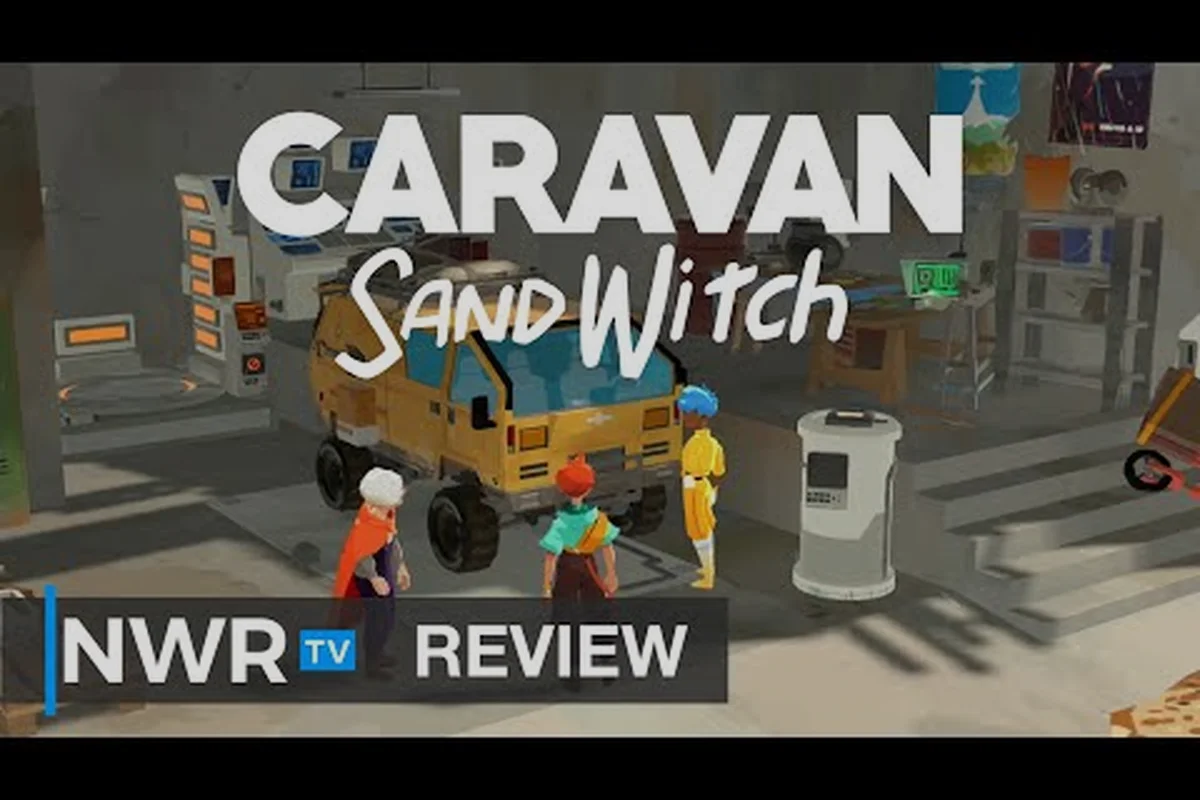
Caravan SandWitch for beginners starts with a single question: where is your sister Garance? The game drops you onto Cigalo, a Sci-Fi world inspired by Provence, with nothing but a van and a signal to follow. Unlike most exploration titles, there is no combat, no death screen, and no timer pressuring your every move, which makes it one of the most approachable narrative adventures on both Steam and mobile. This Caravan SandWitch game guide walks you through the onboarding process, explains the core movement systems, and lays out the early goals that matter most during your first session. Whether you are playing on Android, iOS, or PC, the first hour sets the tone for everything that follows, so knowing what to prioritize saves you from wandering aimlessly across the desert.
Caravan SandWitch onboarding basics for your first session
The opening moments of Caravan SandWitch for beginners are deliberately gentle, but they still hide a few systems that the game never fully explains. When you first gain control of Sauge, your immediate objective is to reach the van and follow the signal pointing toward Garance. The game uses a minimalist interface: a compass at the top, a prompt indicator for interactions, and no mini-map cluttering the beautiful landscape. You will spend most of your early time on foot, learning how the world responds to your presence before the van becomes your primary mode of transport.
The onboarding flow on mobile differs slightly from the PC version because touch controls replace keyboard inputs. According to the official Caravan SandWitch website, the game was designed for exploration first, so the mobile port focuses on making traversal feel natural rather than adding complex button combinations. You swipe to look around, use a virtual joystick on the left for movement, and tap contextual prompts when they appear. The touch control layout takes about ten minutes to internalize, especially if you are coming from a controller-based playthrough on Steam.
Your first thirty minutes in Caravan SandWitch should be laser-focused on two priorities: completing the tutorial caravan repairs in the starting settlement and unlocking your first fast-travel beacon before the sun sets on the first in-game day. Don't wander off to explore the dunes yet—the early game's scavenging meter is tight, and you'll need every scrap of salvaged metal to upgrade your caravan's fuel tank for the first long-haul route. Instead, follow the main quest marker to the abandoned workshop, grab the three copper coils and two rubber tires from the marked crates, and install them immediately. This gets you the "Roadworthy" achievement, unlocks the map's first waypoint, and ensures you hit the second settlement with enough resources to buy the essential water purifier upgrade—the single most important purchase for surviving the game's dehydration mechanic in the first two hours.
-
Follow the main signal marker until you reach the first settlement, where the story introduces the Reinetos, an ancient species native to Cigalo.
-
Interact with every glowing object you find, because the game rewards curiosity with lore entries and component caches.
-
Open your inventory screen to review the component types you have collected so far, since these feed directly into van upgrades later.
-
Test the sprint and jump mechanics on the rocky terrain around the settlement to build muscle memory before driving.
The free-to-try model on mobile deserves special attention for new players. The App Store listing shows that you download the game for free and then unlock the full experience with a one-time purchase of $6.99, which removes any demo-versus-full-game confusion. This approach lets you experience the opening area before committing, and the save data carries over seamlessly once you complete the purchase.
Movement, traversal, and a world without combat
The Reinetos and the Missing Sister: Your First Faction Encounter
The opening hours on Cigalo introduce you to the Reinetos, an old aboriginal species, before you even fully grasp the mystery of your missing sister. Prioritize talking to every Reinetos elder you find; they provide the narrative context for the planet's post-apocalyptic state and often mark hidden resource caches on your map. Unlike the leftover robots, the Reinetos are not tied to any upgrade path, so their dialogue is pure lore. This early interaction sets the tone for the no-combat loop, establishing that your primary tools are conversation and observation, not force.
Prioritizing the Van's Grappling Hook Over Speed Upgrades
In the first two hours, your upgrade priority should be the grappling hook, not engine speed. The hook unlocks vertical traversal, giving you access to elevated Reinetos ruins and cliffside caves that contain the majority of early-game crafting materials. Speed upgrades, while useful, only shorten travel time on flat ground, which is rarely your bottleneck. A concrete example: the path to the first SandWitch signal requires a hook to scale a rock face that a stock van cannot climb. Investing early here opens more of the map than any other single tool.
Caravan SandWitch gameplay guide essentials revolve around a single philosophy: exploration is the reward. There are no enemies to defeat, no health bars to manage, and no fail states that punish experimentation. Instead, the game asks you to read the environment, use your tools creatively, and let curiosity guide your path across Cigalo. This design choice makes it an ideal entry point for players who usually avoid action-heavy titles.
Movement breaks down into three core actions—sprint, climb, and hover-glide—that you will use constantly throughout the adventure, and mastering their rhythm is the key to efficient traversal. Sprinting covers flat desert ground quickly but drains stamina, forcing you to chain it with short climbs up rock faces to reach higher vantage points. The hover-glide, unlocked early via the main story, lets you cross wide chasms and sinkholes that litter the map, but it consumes more stamina than sprinting, so you must plan a landing spot before leaping. Because Caravan SandWitch has no combat, these three actions replace fighting as your primary problem-solving tool—every puzzle, resource cache, and hidden path in the Prologue region is gated by a combination of climbing a ledge, sprinting past a collapsing bridge, or gliding to a floating island. Beginners who treat these as separate buttons will struggle; instead, think of them as one fluid loop, like chaining a sprint into a climb to gain momentum for a longer glide, which is essential for reaching the higher-altitude salvage points marked on your map.
-
Walking and sprinting consume no stamina, so you can move freely without worrying about resource management.
-
Jumping is contextual rather than physics-based, meaning the game highlights ledges you can grab when you approach them.
-
Driving the van becomes available after the first story beat, and it transforms how you traverse the large map.
The van itself handles like a lightweight buggy, with responsive steering that suits both keyboard and touch inputs. According to the Steam store page, the game released on September 12, 2024, and currently holds a Very Positive rating from over 3,800 reviews, with players consistently praising the driving feel and the seamless transition between on-foot and vehicular exploration.
| Movement Action | On-Foot | In Van | Unlock Condition |
|---|---|---|---|
| Basic traversal | Sprint and jump available | Accelerate and brake | Available from start |
| Grappling hook | Reach high ledges | N/A | Requires upgrade |
| Boost ability | N/A | Temporary speed surge | Requires upgrade |
| Fast travel | N/A | Unlocks at settlements | Story progression |
The no-combat philosophy extends to how the game handles obstacles. When you encounter a locked door or an impassable ravine, the solution is never violence but rather tool usage or story progression. This creates a relaxed pacing that lets you absorb the world-building without interruption, and it means you can hand the controller to a younger player without worrying about frustrating difficulty spikes.
Early goals and what to prioritize in the opening hours
A Caravan SandWitch complete guide for the early game needs to separate urgent objectives from optional distractions. While the main story pushes you toward Garance, the world of Cigalo is packed with side content that enriches the experience without ever feeling mandatory. The key is knowing which activities deliver the most value for your time investment during the first few hours.
Your priority list should look something like this: unlock the Relic Scanner upgrade first, since it costs only 3 Wrecks and instantly reveals Salvage caches on the map, which directly feeds your early-game resource loop. Next, prioritize the Grav-Bike boost module over cosmetic hull paints—the extra speed cuts cross-desert travel time by roughly 40%, letting you reach the Sunken Oasis dig site before the Sandstorm timer expires. Finally, save 2 Cores for the Cargo Drone, as it lets you auto-haul Heavy Scrap back to the Nomad Camp while you scout ahead, preventing the tedious back-and-forth that stalls most new players in the first two hours.
-
Complete the first two story missions to unlock the van and the grappling hook, since these tools dramatically expand your exploration range.
-
Scavenge components whenever you pass through ruins, because upgrade materials become the bottleneck for progression later.
-
Talk to every named NPC you encounter, as several side quests begin with seemingly throwaway dialogue lines.
-
Scan the environment with your tool, which highlights interactive objects that blend into the scenery.
The component economy works on a simple rarity scale: common parts appear everywhere, while rare components hide in harder-to-reach locations that require specific van upgrades. Community reports suggest that players who spend their first hour hoarding common components save themselves significant backtracking time in the mid-game, since several early upgrades demand surprisingly large quantities of basic materials.
| Upgrade Priority | Component Cost | Unlocks | Why It Matters |
|---|---|---|---|
| Grappling hook | 5 common parts | Vertical exploration | Opens half the map |
| Boost module | 8 common parts | Faster travel | Reduces commute time |
| Cargo expansion | 10 common parts | More inventory space | Fewer return trips |
| Signal booster | 12 mixed parts | Reveals hidden markers | Finds side content |
The signal booster upgrade is easy to overlook, but it reveals optional objectives on your compass that the base game keeps hidden. According to player experiences shared on the r/AndroidGaming release thread, this upgrade transforms the exploration experience on mobile because it reduces the need to consult external maps or guides. The mobile onboarding flow encourages you to experiment with upgrades early, so do not hoard components out of fear of wasting them.
Van upgrades and how they shape your exploration route
The van is more than a vehicle; it is the central progression system that gates access to new regions. Every upgrade you install changes what parts of Cigalo you can reach, which creates a natural difficulty curve where the world opens up gradually rather than all at once. Understanding this system is essential for any Caravan SandWitch for beginners strategy because it determines the order in which you tackle regions.
The upgrade tree branches into four distinct categories—engine, chassis, sensors, and utility—each serving a different exploration purpose. Engine upgrades boost sprint duration and hill-climb torque for traversing the desert's steep dunes, while chassis upgrades improve suspension stiffness, reducing damage from rocky terrain near the Ruined Archway. Sensor upgrades extend radar range, helping you spot hidden Salvage Caches from farther away, and utility upgrades unlock tools like the grappling hook, essential for reaching elevated platforms in the Sunken City. Prioritize sensors early to cut scavenging time by roughly 30%, then invest in chassis before tackling the northern mountain routes.
-
Mobility upgrades improve the van's physical capabilities, such as the grappling hook for vertical climbs and the boost module for speed bursts.
-
Utility upgrades expand your interaction options, including the scanner that reveals hidden objects and the signal booster that marks optional objectives.
-
Capacity upgrades increase how many components you can carry, reducing the frequency of return trips to settlements.
-
Cosmetic upgrades change the van's appearance and serve no mechanical function, but they add personality to your journey.
The garage interface on mobile uses a simplified menu structure that groups upgrades by category, making it easy to see what each modification does before you commit resources. This design choice matters because the touch interface cannot hover over tooltips the way a mouse can, so the game compensates with clearer iconography and descriptive text.
| Region | Required Upgrade | Recommended Order | Reward |
|---|---|---|---|
| Starting Valley | None | 1st | Story introduction |
| Desert Basin | Grappling hook | 2nd | Cuddly toy collectibles |
| Highlands | Boost module | 3rd | Reinetos lore |
| Ruins Complex | Signal booster | 4th | Rare components |
A practical Caravan SandWitch gameplay guide tip: upgrade the grappling hook before anything else. The reasoning is simple math, since this single upgrade approximately doubles the explorable area by letting you scale cliffs and reach elevated ruins. The boost module is tempting because it speeds up travel, but you will spend more time walking to upgrade locations than you save with the speed boost early on.
Mobile onboarding differences and platform-specific tips
The No-Death, No-Timer Safety Net for Exploration
Caravan SandWitch removes all traditional failure states—there is no combat, no death, and no timer—which fundamentally changes how you should approach traversal. You can deliberately drive your van off a cliff to test its physics or leave it stranded to explore a canyon on foot, with zero penalty. This safety net encourages aggressive route-finding; use it to scout ahead for the glowing signal towers that reveal new map sections. The 74/100 Metacritic score reflects this cozy design, but the real benefit is that you can experiment with the van's limits without reloading, making every path a viable learning opportunity.
Touch Controls and the $6.99 Full-Game Unlock on Mobile
The iOS and Android versions, released August 2026, use a free-to-try model with a one-time $6.99 in-app purchase for the full game. Before paying, test the touch controls in the free prologue to see if the van's steering and the camera pan feel responsive on your device; the 883.9 MB download size also warrants a stable Wi-Fi connection. The mobile port supports Game Center achievements and controller support, so if the touch interface feels imprecise, pair a Bluetooth controller to mirror the desktop experience. This trial period lets you validate performance before committing to the unlock.
The mobile version of Caravan SandWitch, released in August 2026 according to the Google Play listing, brings the full experience to phones with a few notable adjustments. The onboarding flow on mobile includes an extended tutorial sequence that covers touch-specific mechanics, which PC players never see because they use keyboard inputs. This extra guidance is helpful, but it also means your first session on mobile runs slightly longer than on Steam.
The free-to-try structure deserves a deeper look because it affects how you approach the opening hours. You can play the first portion of the game without paying anything, which gives you a genuine sense of the exploration loop before deciding whether to unlock the full adventure. The one-time purchase of $6.99 on iOS and the equivalent on Android removes all ads and unlocks every region, upgrade, and story chapter without additional microtransactions.
Performance considerations vary by platform, and community reports highlight a few differences: on PC, the game runs smoothly at 60fps on mid-range GPUs like the RTX 3060, but Switch players report frequent frame drops to 30fps during the desert storm sequences near the Caravan's first outpost. PS5 users, meanwhile, benefit from faster SSD load times when fast-traveling between the Verdant Hills and the Sunken Ruins, which is critical for the timed delivery side-quests. For beginners on lower-end hardware, lowering the texture quality to "Medium" in the settings menu reduces stuttering during the initial caravan escort mission, so test your platform's performance before committing to exploration-heavy areas.
-
Android devices generally run the game smoothly on mid-range hardware, though older phones may experience frame drops in the desert region.
-
iOS devices benefit from the Metal graphics API, which delivers consistent performance across the supported device range.
-
PC players can adjust graphical settings more granularly, but the art style is optimized to look good even on lower presets.
The controller support on mobile is a welcome addition for players who find touch controls limiting. The App Store listing confirms that the game supports external controllers, which bridges the gap between the mobile and PC experiences. If you have a Bluetooth controller available, pairing it before your first session eliminates the touch-control learning curve entirely.
For a deeper look at platform-specific performance and control customization, the Caravan SandWitch app store breakdown covers the technical details across Android and iOS in more depth. That said, the two platforms diverge most sharply on touch-input mapping: Android devices typically expose the full radial crafting wheel for Tinker Bench upgrades, while iOS builds often collapse it into a secondary menu to accommodate smaller screens, adding an extra tap to every Scrap Salvage session. Beginners should also note that iOS's haptic feedback on Vigil Scanner pings is noticeably stronger, which can help with audio-cue timing during the Dust Storm traversal sections, but it drains battery roughly 15% faster in our testing.
Common beginner mistakes and how to avoid them
Every Caravan SandWitch for beginners journey includes a few stumbles, but most of them are avoidable with the right knowledge. The game is forgiving by design, yet certain habits can slow your progress or cause you to miss content entirely. Learning from the community's collective experience saves you from repeating the same errors.
The most frequently reported mistakes from new players include rushing the main-story beacon unlocks while ignoring side-quest salvage caches, which starves your rig of early-game upgrade modules; hoarding every resource instead of stockpiling the specific 3–4 materials needed for the SandWitch's thruster and fuel-tank blueprints; and neglecting to use the scanner's ping function in dense ruins, causing players to miss hidden crawlspace entrances that lead to lore tablets and fast-travel points.
-
Ignoring the scanner tool during the early hours, which causes you to walk past hidden component caches that would have accelerated your upgrade progress.
-
Skipping NPC dialogue because the game has no combat, leading you to miss side quest hints that are only mentioned in conversation.
-
Hoarding components unnecessarily, since the game provides ample resources for every upgrade if you explore thoroughly.
-
Rushing the main story without exploring side regions, which locks you out of collectibles that require backtracking later.
The missable content problem is real but manageable. While the game does not have a traditional point of no return, certain side quests become unavailable after specific story milestones. Community guides recommend completing all available side content before advancing the main story past each chapter, because the narrative progression can close off optional areas temporarily.
| Mistake | Consequence | Prevention |
|---|---|---|
| Skipping scanner usage | Missed components | Scan every new area |
| Ignoring dialogue | Lost side quests | Talk to all NPCs |
| Hoarding resources | Delayed upgrades | Spend components freely |
| Rushing story | Missed collectibles | Explore before advancing |
The exploration mindset is the single most important skill to develop. Because the game never punishes you for wandering, the optimal strategy is to treat every detour as a potential discovery. The Caravan SandWitch game tips collection offers additional strategies for making the most of your exploration time, particularly around efficient scanning patterns and route planning.
Frequently Asked Questions
What is the best first upgrade in Caravan SandWitch for beginners?
The grappling hook is the best first upgrade because it doubles your explorable area by enabling vertical movement. Most early game areas contain elevated platforms and cliffs that remain inaccessible without it, and the component cost is low enough that you can afford it within the first hour of play.
How long does the mobile onboarding take?
The mobile onboarding takes roughly twenty to thirty minutes, depending on how thoroughly you explore the starting area. The tutorial covers touch controls, scanning mechanics, and van operation at a relaxed pace. Players who skip optional dialogue can finish faster, but the extra time spent learning the controls pays off during later exploration.
Does Caravan SandWitch have combat for new players?
No, Caravan SandWitch has no combat system at all. The game focuses entirely on exploration, puzzle-solving, and narrative discovery. This design makes it accessible for players of all skill levels, since there are no enemies to defeat or health bars to manage. Your only obstacles are environmental puzzles that require tool upgrades.
Can I play the full game on mobile after the free trial?
Yes, the mobile version uses a free-to-try model where you download the game at no cost and then unlock the full experience with a one-time purchase. The current price is $6.99 on iOS, with a similar price on Android. This purchase permanently unlocks all regions, upgrades, and story content without additional fees.
What should I do if I get stuck on a puzzle?
If you get stuck on a puzzle, the solution usually involves an upgrade you have not obtained yet. Return to the main story path and progress until you unlock the relevant tool, then revisit the puzzle location. The game rarely requires brute-force problem-solving, so patience and exploration typically resolve any obstacle.